I am an avid fan of horror; I pursue it, doggedly. My favourite stories have a firm hold in the camp of horror (or at least a shabby old tent). I tend to dip into the grotesque even as I am writing high-fantasy or science-fiction. I am, decisively, a person who willingly uncovers the metaphorical rock to peer at what lurks beneath. What’s odd about this is that I also suffer with anxiety, which I regard as the superpower of finding the horror in everyday situations. Why do I, a person capable of finding the dread in the everyday, actively seek out experiences that compound fear? This is the fundamental ‘paradox of horror’ which ‘amounts to the question of how people can be attracted to what is repulsive’[i]. Resolving this apparent contradiction is ‘essential to the understanding of the genre’[ii].
My first introduction to horror was probably Scooby Doo[iii] or Courage the Cowardly Dog[iv]; both of which portray an embattled, anxiety-ridden dog confronting forces of the supernatural. As a worried child, I saw elements of myself in those ironic scaredy-cats. I went on to cement my love of the macabre with Resident Evil 2[v], a game my mother rented for me and my brother when I was just nine years old. (The rules were a little lax in those days and my mother, like many innocent parents, perceived video games as silly toys for children.) My brother (three years my senior) was too terrified to play, so I took the helm and faced the shambling corpses plaguing Racoon City. I was, like the zombies themselves, enthralled.
How can a person, anxiety or no, derive pleasure out of these forays into darkness? In No Go the Bogeyman: Scaring, Lulling and Making Mock, Marina Warner states:
‘Emotions that thrill and pierce and shake or otherwise affect the body return physical presence and being to the person, recall us to our physical existence; this variety of pain does not obliterate the sense of self, but enhances it.’[vi]
In this way, I find that horror returns me to a sense of self in contrast to mental health conditions such as anxiety that place me in realms of abstracted thought. For me, giving physical presence to anxiety in the form of a monster, murderer or other related ‘evil’ robs anxiety of its power through concretisation: those mundane worries which pile up in the back of my brain seem small and ineffectual when there’s a tangible, albeit fictional, threat at play. This reflects Aristotle’s notion of how ancient tragedies ‘[effect], through pity and fear, the purification of such emotions.’[vii]
Nowadays, however, it’s less the monsters and ghosts that haunt me long after the work has ended. The stuff that moves me to genuine terror is of a more existential note: suggest something profoundly bleak about the nature of humanity and you’ve got me by the adrenals. That’s why one of my favourite horror stories is Harlan Ellison’s ‘I Have No Mouth and I Must Scream’. In the final scene, the protagonist intimates a damning indictment on humanity’s foibles[viii] in that he, and humanity by extension, made irrevocable decisions that led his damnation as a ‘thing that could never been known as human’[ix]. That is existential anxiety in a nutshell: ‘the fact we have to make decisions that “make all the difference,” [sic] but nothing to rely on in making them.’[x] This form of anxiety is, at least according to the Existentialists, a ‘feature of human existence itself[xi]. And that’s goddamn terrifying.
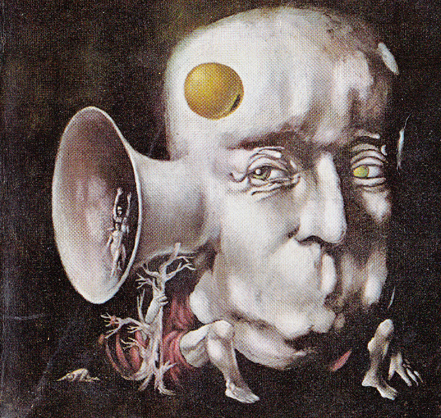
This idea grips me because it presents anxiety as an unavoidable facet of human experience; the monster isn’t killed; the problem isn’t solved. It remains, hanging in the air like a pervading force. It is unable to be ‘purified’ as Aristotle would phrase it, because it is an inescapable truth of life.
That’s why I recently enjoyed ‘The Family Car’ from New Fears[xii].The monster that hounds the protagonist is still on the loose at the end, unexplained, unsolved, and seemingly inescapable. A bit like the human condition itself. This type of anxiety forces us to confront ‘the nothing that is ourselves’[xiii].
Horrifying.
[i] Noël Carroll, The Philosophy of Horror (London: Routledge, 1990), 160.
[ii] Ibid. 160.
[iii] Scooby Doo, Where Are You!, Directed by Joseph Barbera and William Hanna, CBS, 1969
[iv] Courage the Cowardly Dog, Directed by John R. Dilworth, Cartoon Network, 1999
[v] Resident Evil 2, Directed by Hideki Kamiya, Capcom, 1998
[vi] Marina Warner, No Go the Bogeyman: Scaring, Lulling and Making Mock (London: Vintage, 1998),9.
[vii] Aristotle, Poetics (335 BC), trans. Anthony Kenny (Oxford: Oxford University Press, 2013), 23.
[viii] Harlan Ellison, The Harlan Ellison Collection: I Have No Mouth and I Must Scream (New York: Open Road, 2014), 29.
[ix] Ibid. 29.
[x] Thomas E. Wartenburg, Existentialism (Oxford: Oneworld, 2008), 78.
[xi] Ibid. 71.
[xii] Brady Golden, ‘The Family Car’, in New Fears, ed. Mark Morris (London: Titan Books, 2017), 75-92.
[xiii] Thomas E. Wartenburg, Existentialism, 87.
 Horrible Writing