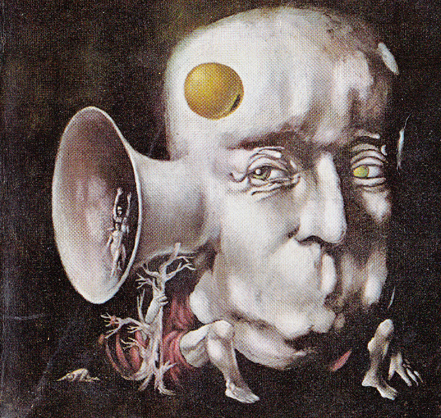
The Nature of Horror

As my father overturned the seaweed-encrusted rock, a flurry of claws and chitin erupted as the crustaceous horrors lurking beneath scuttled maddeningly in all directions—their legs clacked and clambered against wet sand in a desperate struggle to hide from the sun. The event certainly changed the atmosphere of family beach day. I’d never been fond of crabs, but to see them move with such abrupt inhuman enthusiasm sickened my stomach and scorched an everlasting mark onto my amygdala. Yet, despite this experience, every time I’ve been to the beach since, I’ve tried to turn over a rock in the hopes of interrupting another crab gathering. Why do I do this with the foreknowledge that I’ll be horrified? And why am I disappointed when all I discover are seaweed and lugworm casts?

The crabs here are—as all crabs should be—metaphorical, the situation a microcosm of a larger human phenomena: engaging with horror fiction, turning pages instead of rocks. An ongoing example of this is the recent surge of popularity in pandemic related horror films on streaming websites during the Covid 19 crisis.[i] What is it about the nature of horror that compels some of us to its hideous maw? Why do we peep under rocks?
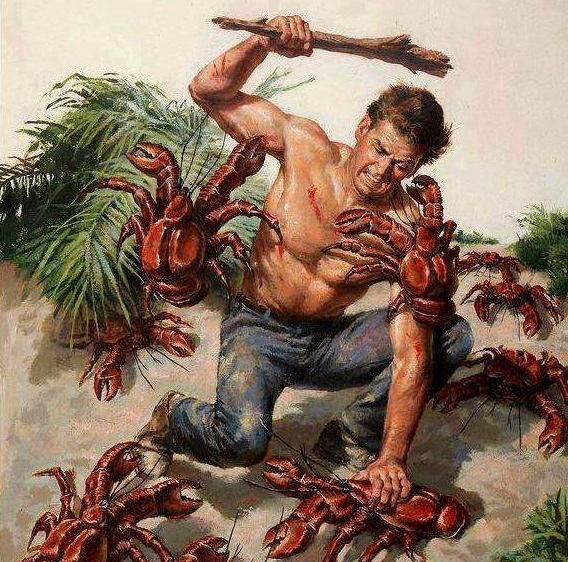
Pictured: Me on a relaxing day out at the beach.

Curiosity is, arguably, the beating undead heart of horror. Noël Carroll demonstrates in The Philosophy of Horror[ii] that the very disgust and revulsion horror generates is key to why we are drawn to it.

Monsters…are repelling because they violate standing categories. But for the self-same reason, they are also compelling of our attention. They are attractive, in the sense that they elicit interest, and they are the cause of, for many, irresistible attention, again, just because they violate standing categories.[iii]

In my example, it’s not that I want to be horrified by crabs, it’s that the very curiosity that compels me to want to see them is contingent on that which makes me fear them: their exceptionality. This can be observed in ‘The Abduction Door’[iv]; the door violates ‘the mechanics of any universe [the protagonist] has been taught to believe in’[v], and therefore piques the audience’s interest and generates fear at the same time because it is an exception, an anomaly. Covid 19 is an example of a real-world monstrous exception, and therefore people are curious about it; they are engaging with pandemic media because they are fascinated and revolted by its exceptionality.

But why are human beings compelled to that which violates our conceptions of the known? Perhaps one of the more existential reasons that people engage with horror is due to our need to consolidate our identity and define what makes us human. In Limits of Horror: Technology, Bodies, Gothic[vi], Fred Botting reasons that ‘monstrous exceptions allow structures to be identified and instituted, difference providing the prior condition for identity to emerge. As exceptions to the norm, monsters make visible, in their transgression, the limit separating proper from improper, self from other.’[vii] In other words, the captivating pull of horror lies in its ability to present transgressions against the norm, and therefore make clear, in contrast, ‘what we are, what we are not [and] what we may be.’[viii]
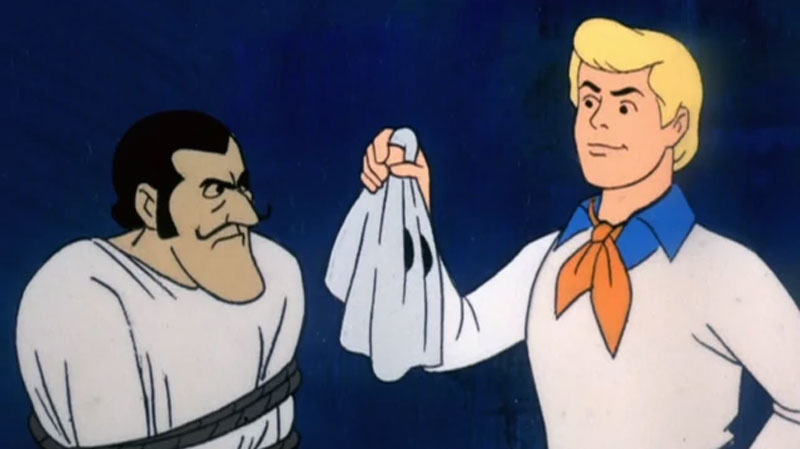
Scooby Doo blurs the binary of man and monster and, in doing so, reminds us that we are all capable of monstrosity. Zoinks!

Manuel Aguirre likens this process to an idea in Celtic mythology, in which the ‘wholeness of the world resides precisely in its link with the Otherworld.’[ix] He highlights this as the ‘paradox that a proper definition of a given thing in a given dimension requires reference to another dimension’[x]. For example, the paradise of heaven is arguably more compelling because of its stark contrast to the eternal damnation of hell. Paradise on its own could be considered meaningless, perhaps even pedestrian. Steven King agrees, stating that ‘we love and need the concept of monstrosity because it is a reaffirmation of the order we all crave as human beings’.[xi] In this view, ‘the monstrous are not strangers, after all, but the appalling potential of human evil.’[xii] Horror then presents the inhuman to bolster, by comparative distinction, our humanity.

If it is true, as modern physics attests, that ‘the observer is part of the thing observed’[xiii], then when we engage with horror fiction, we are seeing the light of ourselves burn bright in the darkness that the genre provides. And our fascination with the dark is enough make us turn over the rock.


[i] Alicia Adejobi, ‘Why are we watching pandemic movies like Contagion? Psychologist warns it could “amplify anxiety”’, Metro, 1 Apr 2020, Available at: https://metro.co.uk/2020/04/01/watching-pandemic-movies-like-contagion-psychologist-warns-amplify-anxiety-12493880/ [Accessed 5 Apr 2020]

[ii] Noël Carroll, The Philosophy of Horror (London: Routledge, 1990)

[iii] Ibid., 188.

[iv] Christopher Golden, ‘The Abduction Door’ in New Fears, ed. Mark Morris (London: Titan Books, 2017), 349-365.

[v] Ibid., 359

[vi] Fred Botting, Limits of Horror: Technology, Bodies, Gothic (Manchester: Manchester University Press, 2008)

[vii] Ibid., 8

[viii] Manuel Aguirre, The Closed Space: Horror, Literature and Western Symbolism (Manchester: Manchester University Press, 1990), 3.

[ix] Ibid., 4.

[x] Ibid., 10.

[xi] Steven King, Danse Macabre (London: Hodder & Stoughton, 1981), 55.

[xii] Marina Warner, No Go the Bogeyman: Scaring, Lulling and Making Mock (London: Vintage, 1998), 261.

[xiii] Aquirre, The Closed Space, 10.
Horror and Location

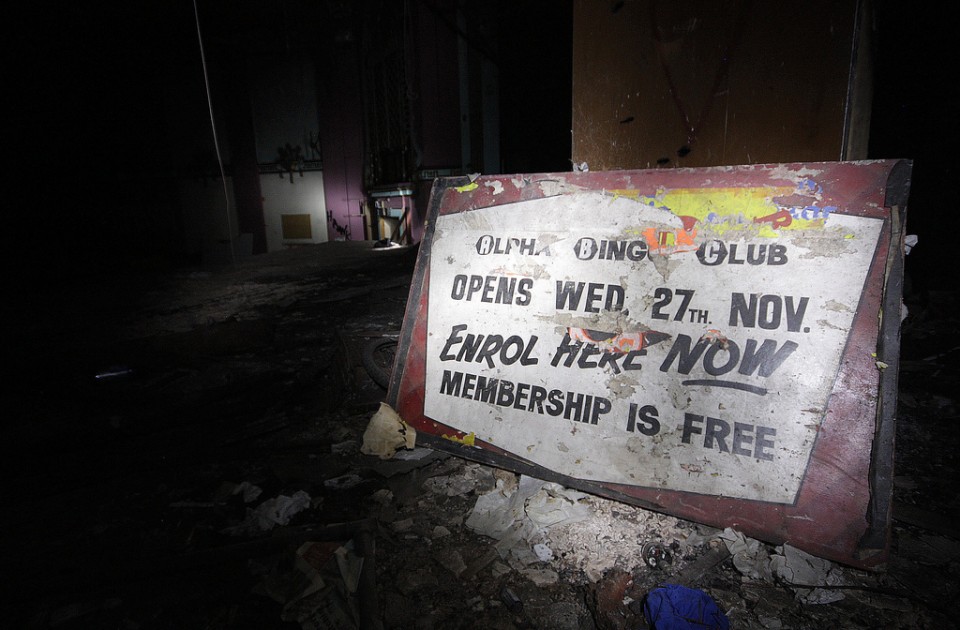
The spooky asylum, the creepy mansion, the post-apocalyptic bingo hall; the horror genre is replete with all manner of settings whose only purpose, like a modern-day job centre, is to deaden the soul and shrivel the spirit. While setting plays an incarnate role in many genres, horror itself seems particularly reliant on location to achieve its effects. ‘The Abduction Door’[i] is arguably one of the most successful horror stories in the New Fears[ii] collection, and I would argue this is to do with its application of location; and how the setting exerts itself as an existential threat to the protagonist and, by extension, the reader.

Never thought I’d be typing ‘abandoned bingo hall’ into Google, but here we are.

Manuel Aquirre writes that

at the heart of the literature of terror lies one ruling symbol. It manifests itself in haunted buildings, in labyrinths and prisons, catacombs and caves; in borders and frontiers, thresholds and walls; in the terror of the shuttered room and the protection of the magic circle; in the promise and dread of the closed door; in journeys of discovery, feats of transgression and flight from retribution. The world is designed in horror literature as space and, furthermore, as a closed space.[iii]

The space in horror ‘begins and will predictably end with a confrontation of this space by man…as manifested in man’s…persecution by evil, the Alien, the Other.’[iv] In other words, a horror setting is only such if it threatens the self and corrupts the ontological faculties of its victims. For instance, it is not the abduction door itself, not the realm beyond it, that imbues the protagonist and therefore the story with terror. Tellingly, as a child, the protagonist isn’t scared of the door because ‘with the first glimpse [of the door] [he] felt only curiosity.’[v] It’s only when Cyril, the hotel bellman, explains how ‘kids got snatched right in the middle of their elevator rides…sometimes grownups, too’[vi], does the protagonist respond with fear and forget to breathe.[vii] This may seem like an obvious proposition, but it is worth stating that the fear of the abduction door is generated once it is understood as a threat to the self. This examination lays the groundwork for understanding why some locations in horror literature are so ubiquitous.

Few locations, for instance, are as abundant as the haunted house.[viii] Yet the home, a place of human sanctuary, should be the least on a list of places of terror. However, it must be understood that this setting works as a staple of horror because the external landscape is ‘central to the search for human identity, the extension of self and society through conquest’[ix]. The hostile presence of the Other within a home, a place of human sanctuary, threatens not only the safety of the houses’ occupants, but their very being and identity, as ‘it is in terms of such otherness that our own identities consolidate and dissolve’.[x]  The haunted house is, ultimately, a symbol of terror because ‘it is no longer a human space; it does not happen to be sheltering a numinous [that which transcends the rational] presence, it is the numinous presence, an otherworldly living space that craves birth, sustenance, growth, reproduction in the human world. It is another perfect parasite, another cell in the body of mankind which has been transmuted into a part of the Enemy.’[xi] In other words, it is through the reduction of the human, and the self by extension, that the horror location generates its capacity for terror.

Scooby Doo, Where Are You! captures, in stark detail, the ontological terror of the haunted house and the declension of the human spirit.

The realm beyond the abduction door could be considered a form of the haunted house, especially with its eerily similar make-up of ‘narrow corridors and strangely angled doors’[xii]. It asserts itself on the ‘human world’ of the protagonist by stealing his daughter. Understandably, this causes a stripping away of his identity: ‘She’s been taken and the only part of me that’s left is the animal part.’[xiii] His very identity dissolves from the incursion of the abduction door. Moreover, at the story’s conclusion, he is faced with the dilemma that he must become a kidnapper himself to return to his daughter. He must become akin to the other former human ‘monsters’ that stalk the realm beyond the abduction door, stealing other people’s children’[xiv]. His humanity itself is under threat of invasion. He is caught in the ontological paradox of needing to surrender his humanity[xv] in order to regain his humanity.

‘Fear’, writes Sartre, arises ‘when the world of the utilisable vanishes abruptly and the world of magic appears in its place’[xvi]. Yet the magical realms of Hogwarts and Narnia do not inspire terror as much as wonderment. But these worlds are not framed as incursions on the human world; more as extensions of it. It is, arguably, the incursion of magical forces upon human spaces which is required for fear; such as the human house turned into a malevolent presence, or the mundane elevator turned into a place of child abduction. The true horror location is one that encroaches, as in the case with ‘The Abduction Door’[xvii], on the human soul itself.


[i] Christopher Golden, ‘The Abduction Door’ in New Fears, ed. Mark Morris (London: Titan Books, 2017), 349-49-365.

[ii] New Fears, ed. Mark Morris (London: Titan Books, 2017)

[iii] Manuel Aguirre, The Closed Space: Horror, Literature and Western Symbolism (Manchester: Manchester University Press, 1990), 2.

[iv] Ibid., 84.

[v] Golden, ‘The Abduction Door’, 350.

[vi] Ibid., 351.

[vii] Ibid., 351.

[viii] Aguirre, The Closed Space, 189.

[ix] Graham Mort, ‘Landscapes and Language’ in The Creative Writing Coursebook, ed. Julia Bell and Paul Magrs (London: Macmillan, 2001), 178.

[x] Ibid., 179.

[xi] Aguirre, The Closed Space, 192.

[xii] Golden, ‘The Abduction Door’, 359.

[xiii] Ibid., 356.

[xiv] Ibid., 365.

[xv] Ibid.

[xvi] Jean-Paul Sartre, Sketch for a Theory of the Emotions (London: Methuen, 1971), 90-91., cited in Joseph Grixti, Terrors of Uncertainty: The Cultural Contexts of Horror Fiction (London: Routledge, 1989), 13.

[xvii] Golden, ‘The Abduction Door’

Horror and the Writer

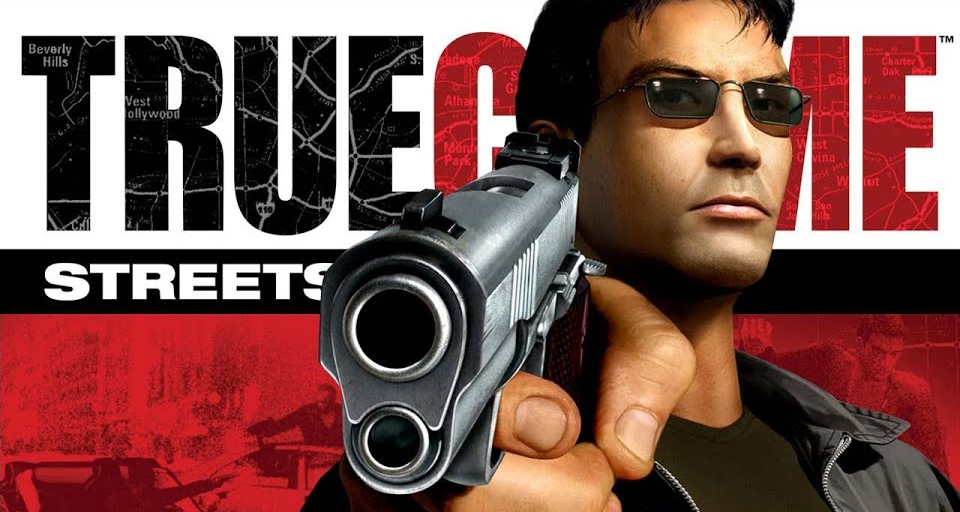
The genre of True Crime does not seek to compel its audience to transgress legal boundaries. Nor does the Action genre strive to engender an appetite for death-defying leaps from burning buildings with a pet or lover in tow. The Horror genre is unusual then, but not entirely alone, in deriving its namesake from the condition it seeks to establish in its reader.[i] The hallmark of a good horror story—because human beings are uniquely masochistic—is in how much it leaves its audience shaken and disturbed[ii], with horror texts often lambasted for their lack of ability to dampen vertebral temperature.

Hey, kids! Crime is good and always pays!

For me, the story ‘Roudabout’[iii] in New Fears[iv], an anthology of contemporary horror stories, failed in its duty to illicit shivers. Conversely, ‘Dollies’[v] and ‘Shepherds’ Business’[vi] had my innards trembling like a rosewater blancmange in the hands of a chronically-panicked waiter. But what techniques do the latter employ to generate their effect while the former flounders? Why do we run from some stories in horror and others in boredom?

Steven King, the veritable lich of horror, attests that ‘a good horror story is one that functions on a symbolic level’[vii] since ‘humans deal better with symbols.’[viii] This, I argue, is why Lovecraft’s horror fictions are so compelling. His eldritch monstrosities are metaphors for an ‘outside that breaks through’[ix], namely external forces that govern our lives and lay stark the insignificance of our being[x]. A giant octopus-god is more goofy than terrifying, but Cthulhu is a symbol that there are greater things than humankind, and their briefest whims may spell our extinction. That’s true terror. In this way, it could be said that good horror is like a gravestone: it isn’t the presence of well-polished granite that sends tremors to our thoraxes, it’s what the gravestone tells us. It says, ‘Hey, there’s a body of a former human being below me. And one day this earth is going to reclaim you, too.’

Hi, I'm a symbolic representation of your inevitable death. Nice to meet you.
Hi, I’m a symbolic representation of your inevitable death. Nice to meet you.

I’m not sure what the horse-ghost creature from Afghanistan represents in ‘Roundabout’. It isn’t particularly clear. Therefore, it isn’t particularly scary beyond its shadowlike ephemerality. The baby wrapped in the skin of a dead baby is arguably clearer in what it tells us about Thomas Tulloch’s character in ‘Shepherd’s Business’. This symbol describes a man so void of empathy that he assumes presenting his grieving wife with a new baby wrapped in the skin of her stillborn is a fine and husbandly gesture. Furthermore, it tells us, since this man is a functioning part of his community, about a culture that does not value empathy nor promote it. Thomas, himself, spells this out: ‘It was just, your baby’s dead, get over it, you’ll have another.’[xi] The true horror of this skin-wearing baby is then its status as a symbol for a void of human compassion.

‘Dollies’ also features a dead baby; this one representing the subversion of a mother’s duty to care for her offspring[xii]. As readers, we assume (and this story lays bare our sexism) that a girl should care for her dolls and a mother should care for her child. But when Nolly’s mother says, ‘I let the wrong twin [referring to Nolly] live’[xiii] and Nolly’s Dolls die due to ‘smallpox’[xiv], horror ensues because these events are symbols of a lack of matriarchal instinct. The final and most horrifying manifestation of this symbol comes when Nolly suffocates her own child and places her body on the shelf next to her dead dolls[xv].

On a scale of 1 to evil, this doll registers as burn-it-immediately.

There is also much to be said about the revolting aspects of these stories—smallpox, the flayed skin of a baby—in that they add an element of utmost significance[xvi]: disgust. This is because ‘affective reaction to the monstrous in horror stories is not merely a matter of fear. Rather threat is compounded with revulsion, nausea and disgust.’[xvii] King supports this theory, stating that stories ‘dealing with horror always do their work on two levels…the ‘gross out’ level…’ and the deeper symbolic level.[xviii] ‘Roundabout’ had bones[xix], but I don’t think it was revolting enough.

With this understanding of how horror promotes its namesake in its readers, it could be said that writers of horror must dig past the spooky gravestone to unearth the rotting remains beneath.

Metaphorically, of course.


[i] Noël Carroll, The Philosophy of Horror (London: Routledge, 1990), 14-15.

[ii] Guy N. Smith, Writing Horror Fiction (London: A & C Black, 1996) 1.

[iii] Muriel Gray, ‘Roundabout’ in New Fears, ed. Mark Morris (London: Titan Books, 2017), 275-292.

[iv] Mark Morris, ed., New Fears (London: Titan Books, 2017)

[v]  Kathryn Ptacek, ‘Dollies’ in New Fears, ed. Mark Morris (London: Titan Books, 2017), 333-348.

[vi] Stephen Gallagher, ‘Shepherd’s Business’ in New Fears, ed. Mark Morris (London: Titan Books, 2017), 29-49.

[vii] Steven King, Danse Macabre (London: Hodder & Stoughton, 1981), xi.

[viii] Ibid.

[ix] Mark Fisher, The Weird and the Eerie (London: Repeater, 2016), 16.

[x] Nathaniel Lee, ‘How Stephen King scares his audience in 3 steps’, Business Insider, 11 Sep 2019, https://www.businessinsider.com/stephen-king-horror-books-writing-scary-movies-it-2019-9?r=US&IR=T [accessed 29 Feb 2020]

[xi] Gallagher, ‘Shepherd’s Business’, 34.

[xii] Seminar about dollies

[xiii] Ptacek, ‘Dollies’, 346.

[xiv] Ibid. 333.

[xv] Ibid. 348.

[xvi] Carroll, The Philosophy of Horror,23.

[xvii] Ibid. 22.

[xviii] King, Danse Macabre, 17.

[xix] Gray, ‘Roundabout’, 290.

Horror and Me

I am an avid fan of horror; I pursue it, doggedly. My favourite stories have a firm hold in the camp of horror (or at least a shabby old tent). I tend to dip into the grotesque even as I am writing high-fantasy or science-fiction. I am, decisively, a person who willingly uncovers the metaphorical rock to peer at what lurks beneath. What’s odd about this is that I also suffer with anxiety, which I regard as the superpower of finding the horror in everyday situations. Why do I, a person capable of finding the dread in the everyday, actively seek out experiences that compound fear? This is the fundamental ‘paradox of horror’ which ‘amounts to the question of how people can be attracted to what is repulsive’[i]. Resolving this apparent contradiction is ‘essential to the understanding of the genre’[ii].

My first introduction to horror was probably Scooby Doo[iii] or Courage the Cowardly Dog[iv]; both of which portray an embattled, anxiety-ridden dog confronting forces of the supernatural. As a worried child, I saw elements of myself in those ironic scaredy-cats. I went on to cement my love of the macabre with Resident Evil 2[v], a game my mother rented for me and my brother when I was just nine years old. (The rules were a little lax in those days and my mother, like many innocent parents, perceived video games as silly toys for children.) My brother (three years my senior) was too terrified to play, so I took the helm and faced the shambling corpses plaguing Racoon City. I was, like the zombies themselves, enthralled.

Poor old Marvin…

How can a person, anxiety or no, derive pleasure out of these forays into darkness? In No Go the Bogeyman: Scaring, Lulling and Making Mock, Marina Warner states:

‘Emotions that thrill and pierce and shake or otherwise affect the body return physical presence and being to the person, recall us to our physical existence; this variety of pain does not obliterate the sense of self, but enhances it.’[vi]

In this way, I find that horror returns me to a sense of self in contrast to mental health conditions such as anxiety that place me in realms of abstracted thought. For me, giving physical presence to anxiety in the form of a monster, murderer or other related ‘evil’ robs anxiety of its power through concretisation: those mundane worries which pile up in the back of my brain seem small and ineffectual when there’s a tangible, albeit fictional, threat at play. This reflects Aristotle’s notion of how ancient tragedies ‘[effect], through pity and fear, the purification of such emotions.’[vii]

Nowadays, however, it’s less the monsters and ghosts that haunt me long after the work has ended. The stuff that moves me to genuine terror is of a more existential note: suggest something profoundly bleak about the nature of humanity and you’ve got me by the adrenals. That’s why one of my favourite horror stories is Harlan Ellison’s ‘I Have No Mouth and I Must Scream’. In the final scene, the protagonist intimates a damning indictment on humanity’s foibles[viii] in that he, and humanity by extension, made irrevocable decisions that led his damnation as a ‘thing that could never been known as human’[ix]. That is existential anxiety in a nutshell: ‘the fact we have to make decisions that “make all the difference,” [sic] but nothing to rely on in making them.’[x] This form of anxiety is, at least according to the Existentialists, a ‘feature of human existence itself[xi]. And that’s goddamn terrifying.

I’ve got no mouth, but at least there’s someone dancing in my ear and I’ve got this cool stick…?

This idea grips me because it presents anxiety as an unavoidable facet of human experience; the monster isn’t killed; the problem isn’t solved. It remains, hanging in the air like a pervading force. It is unable to be ‘purified’ as Aristotle would phrase it, because it is an inescapable truth of life.

That’s why I recently enjoyed ‘The Family Car’ from New Fears[xii].The monster that hounds the protagonist is still on the loose at the end, unexplained, unsolved, and seemingly inescapable. A bit like the human condition itself. This type of anxiety forces us to confront ‘the nothing that is ourselves’[xiii].

Horrifying.


[i] Noël Carroll, The Philosophy of Horror (London: Routledge, 1990), 160.

[ii] Ibid. 160.

[iii] Scooby Doo, Where Are You!, Directed by Joseph Barbera and William Hanna, CBS, 1969

[iv] Courage the Cowardly Dog, Directed by John R. Dilworth, Cartoon Network, 1999

[v] Resident Evil 2, Directed by Hideki Kamiya, Capcom, 1998

[vi] Marina Warner, No Go the Bogeyman: Scaring, Lulling and Making Mock (London: Vintage, 1998),9.

[vii] Aristotle, Poetics (335 BC), trans. Anthony Kenny (Oxford: Oxford University Press, 2013), 23.

[viii] Harlan Ellison, The Harlan Ellison Collection: I Have No Mouth and I Must Scream (New York: Open Road, 2014), 29.

[ix] Ibid. 29.

[x] Thomas E. Wartenburg, Existentialism (Oxford: Oneworld, 2008), 78.

[xi] Ibid. 71.

[xii] Brady Golden, ‘The Family Car’, in New Fears, ed. Mark Morris (London: Titan Books, 2017), 75-92.

[xiii] Thomas E. Wartenburg, Existentialism, 87.

Design a site like this with WordPress.com
Get started